
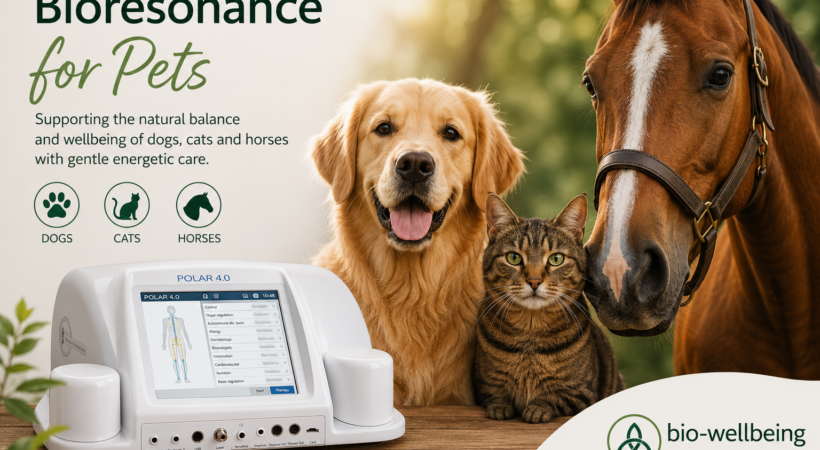
Animals can be incredibly sensitive. Anyone who has lived with a dog, cat or horse will know that they often react to changes in their environment, routine, food, stress levels and even the emotional state of the people around them. Sometimes these changes show up clearly. A dog may begin scratching, licking, pacing or becoming unsettled. A cat may hide away, become fussy with food or show changes in behaviour. A horse may become tense, reactive, sluggish or difficult to settle.
When an animal does not seem quite right, the first and most important step should always be appropriate veterinary care. A vet can assess symptoms, diagnose illness, identify urgent problems and advise on treatment. Bioresonance should not be seen as a replacement for veterinary diagnosis or medical treatment. In the UK, organisations such as the RCVS and BSAVA strongly emphasise that animal health and welfare should remain vet-led, especially where illness, pain, disease or unexplained symptoms are present.
However, many pet owners are also interested in gentle complementary approaches that may help explore stress patterns, sensitivities and energetic imbalances in their animals. This is where bioresonance may offer an interesting support option.
What is bioresonance for pets?
Bioresonance is a non-invasive energetic testing and balancing approach. At Bio-Wellbeing, the focus is on identifying patterns that may be placing stress on the body’s natural systems. Rather than forcing the body, the aim is to observe energetic responses and support the body towards better balance.
With animals, this can be especially appealing because the process is gentle. Dogs, cats and horses cannot explain how they feel in words, but they often show signs through behaviour, posture, coat condition, digestion, energy levels, skin response and general temperament. Bioresonance offers a structured way to look for possible energetic stressors that may be worth exploring further.
This may include areas such as food sensitivities, environmental triggers, stress responses, emotional tension, recovery support, general vitality and wellbeing patterns.
Why pet owners consider bioresonance
Many owners look into bioresonance because they feel their animal is struggling, but the problem is not always straightforward. For example, a dog may seem itchy at certain times of year. A cat may react badly after certain foods. A horse may appear physically sound but still lack energy, focus or calmness. In other cases, an animal may already be under veterinary care, and the owner wants an additional complementary approach to support general wellbeing.
Bioresonance may be considered by owners who want to explore:
- Possible food or environmental sensitivities
- Skin irritation patterns
- Digestive stress
- Behavioural tension or nervousness
- Low energy or sluggishness
- Stress after changes in home, yard or routine
- General wellbeing support for older animals
- Recovery support alongside appropriate veterinary care
It is important to be realistic. Bioresonance is not a veterinary diagnostic test, and it should not be used to delay urgent care. If an animal is in pain, losing weight, bleeding, unable to eat, struggling to breathe, collapsing, showing sudden behavioural changes or displaying severe symptoms, veterinary advice should be sought immediately.
Bioresonance for dogs
Dogs are often highly responsive to their environment. Changes in diet, household stress, new animals, seasonal changes, grooming products, parasites, cleaning products or routine disruption can all affect them.
Owners may consider bioresonance for dogs when they notice recurring patterns such as itching, licking paws, digestive upset, restlessness, anxiety, dull coat, low energy or unexplained sensitivity. The aim is not to diagnose a condition, but to explore whether there are energetic stress patterns that could be contributing to the dog’s overall wellbeing picture.
For some dogs, the process may help highlight areas worth discussing with a vet, such as diet, allergens, environmental exposure or stress management.
Bioresonance for cats
Cats can be more subtle than dogs. They may hide discomfort, withdraw, change their eating habits or become more reactive without obvious explanation. Because cats are so sensitive to routine and environment, energetic stress can sometimes appear through behaviour before anything else is noticed.
Bioresonance for cats may be useful for owners who want to explore wellbeing patterns linked to food tolerance, stress, skin response, digestion or changes in behaviour. Because cats can be easily unsettled, a calm and gentle approach is especially important.
Any sudden change in a cat’s eating, drinking, toileting, breathing, movement or behaviour should always be checked by a vet.
Bioresonance for horses
Horses are large, powerful animals, but they are also extremely sensitive. Small changes in feed, environment, workload, herd dynamics, rider tension, tack, travel, weather and stress levels can have a significant effect.
Horse owners may consider bioresonance when looking at performance, recovery, tension, digestive balance, coat condition, mood, sensitivity, stiffness patterns or general vitality. It may be particularly interesting for owners who already take a holistic view of horse management and want to consider physical, environmental and emotional stressors together.
As with dogs and cats, veterinary involvement is essential where there are signs of pain, lameness, illness, injury or significant behavioural change.
Can bioresonance be done remotely for animals?
In some cases, energetic testing may be explored remotely using a sample, such as hair or nail/claw material, depending on the method used. This may be useful for animals that do not travel well, nervous cats, busy horse owners or pets that become unsettled in unfamiliar places.
Remote work should still be approached responsibly. It should be understood as a complementary wellbeing screening, not as a substitute for veterinary examination or laboratory testing.
A gentle support option, not a replacement for veterinary care
The best approach is not “either/or”. For animal wellbeing, the safest model is veterinary care first, with complementary support used thoughtfully and transparently. The RCVS notes that veterinary surgeons must prioritise animal health and welfare, and the BSAVA recommends that owners seek veterinary advice before using complementary therapies for animals.
At Bio-Wellbeing, bioresonance for pets can be viewed as a way to explore possible energetic imbalances, sensitivities and stress patterns. It may help owners think more clearly about what could be affecting their animal and what areas may need further attention.
For dogs, cats and horses, the goal is simple: to support the animal’s natural balance, comfort and wellbeing in a gentle, structured and non-invasive way.
If you would like to explore gentle bioresonance support for your dog, cat or horse, you can learn more about our approach through our remote allergy testing and DNA sample testing services, or contact Bio-Wellbeing to ask whether this may be suitable for your animal.