
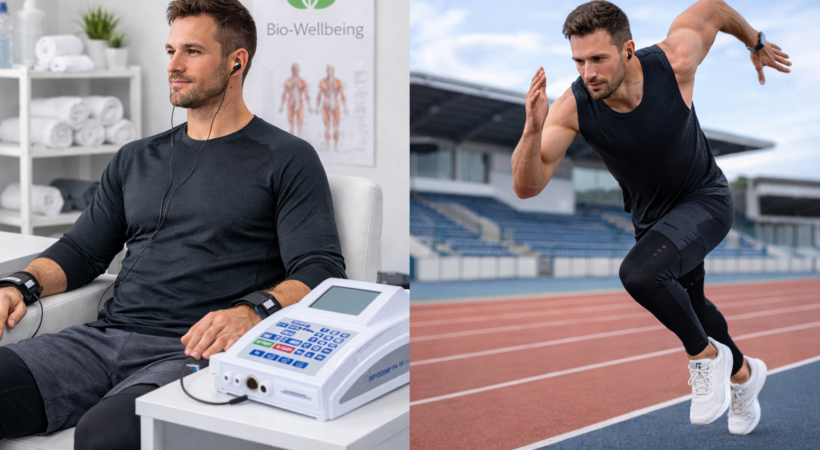
For anyone serious about sport, performance is never just about trying harder. Effort matters, but effort alone does not explain why one day the body feels sharp, responsive, and powerful, while on another day it feels flat, heavy, or slightly out of sync. Athletes, active individuals, and people with a strong performance mindset often realise that training is only one part of the picture.
The body performs best when multiple factors are working together. Recovery, resilience, rest, nervous system balance, consistency, and physical readiness all shape what a person can bring into training and competition. Even small shifts in these areas can influence how well someone moves, adapts, and sustains output over time.
That is why so many people interested in higher-level performance begin exploring wider wellbeing strategies. They are not always looking for a dramatic breakthrough. In many cases, they simply want to feel more balanced, more prepared, and more capable of getting the best from the work they are already putting in.
Performance Is Built on More Than Training Volume
Many people assume better results come from adding more. More sessions, more intensity, more drills, more discipline. But experienced athletes often discover that improvement is not only about doing more. It is also about how well the body is handling what it is already being asked to do.
If the system is under too much strain, performance can become less efficient. A person may still complete the training, but the quality can feel reduced. Reaction speed may be slightly down. Concentration may feel harder to hold. Recovery between sessions may take longer. Motivation can begin to feel less natural and more forced.
This is where the idea of sports performance enhancement becomes more interesting. Real enhancement is not just about pushing harder. It is about helping the body operate in a way that is more coordinated, more adaptable, and more supportive of consistent output.
Why Recovery Deserves More Attention
One of the most overlooked parts of performance is recovery. The body does not improve simply because training happened. It improves because it can absorb, adapt to, and rebuild from what it has experienced. When recovery is poor, progress often slows down even when effort remains high.
This does not only apply to elite athletes. It also matters for runners, gym-goers, cyclists, martial artists, footballers, and anyone who wants their body to respond well to demand. When recovery is working well, a person tends to feel more stable between sessions. Their movement feels cleaner, energy feels more available, and they are more able to keep building momentum.
For many people, that makes recovery one of the most valuable places to focus. Not because it sounds exciting, but because it supports almost everything else.
Looking at the Bigger Picture
Physical output is only one layer of performance. Beneath it are other important influences: sleep quality, background stress, tension levels, mental sharpness, confidence, emotional steadiness, and the ability to switch between activation and recovery at the right times.
If any of those areas are out of balance, the body may not perform as well as expected. A person can still be fit, determined, and highly disciplined, yet still feel as though something is limiting their consistency. That feeling is often what drives people to look for a more investigative approach.
Rather than looking only at visible symptoms or isolated frustrations, some prefer to explore whether there are broader patterns affecting how well the body is functioning overall. This is part of what makes bioresonance appealing to performance-focused individuals. It fits with the idea that the body works as a system, and that performance improves when that system is supported more intelligently.
Why Performance-Focused People Are Open to Exploration
Athletes and performance-driven individuals are often highly aware of subtle changes in how they feel. They may notice when their body does not bounce back as quickly, when output feels harder to produce, or when focus seems slightly less stable than usual. These things may be difficult for others to spot, but they can be obvious to someone who is tuned into their own physical condition.
Because of that awareness, they are often open to supportive approaches that aim to explore underlying imbalances. They are used to adjusting routines, refining habits, and working with detail. In that environment, a session designed to investigate broader wellbeing patterns can feel like a logical extension of the same mindset.
They do not always want a generic answer. They want insight that feels specific to them.
A More Personal Route to Better Performance
No two people respond identically to the same demands. One athlete thrives under heavy training loads. Another becomes depleted more quickly. One person stays calm under pressure. Another carries tension into performance. One feels naturally recovered after effort. Another seems to hold the strain longer than expected.
That is why personalisation matters. A broader approach to wellbeing can help a person feel that they are not just following a standard model, but exploring what may actually support their own body more effectively.
In this context, bioresonance may be of interest to those looking for a more individual route into performance support. It aligns with the view that better outcomes can come not only from more effort, but from better balance, greater body awareness, and a more structured understanding of what may be affecting the system.
Why This Topic Connects With Readers
This keyword works well because it speaks directly to desire. People interested in sports performance do not just want information. They want progress. They want to know what might help them feel stronger, sharper, and more capable in a way that lasts.
That does not mean the post needs to make exaggerated claims. In fact, it is usually more effective when it sounds measured and credible. Readers are more likely to trust content that recognises performance as something influenced by many factors, not something reduced to a single promise.
A good post on this topic helps the reader see themselves in the content. Even if they are not a professional athlete, they may still relate strongly to wanting better output, better recovery, and a greater sense of control over how their body performs.
Final Thoughts
True performance is about more than force. It is about timing, resilience, readiness, recovery, and how well the body is coping with ongoing demand. For many active individuals, that means looking beyond training alone and exploring broader ways to support balance and function.
For those interested in a more investigative and individual approach, bioresonance may be worth exploring as part of the wider conversation around sports performance enhancement.